
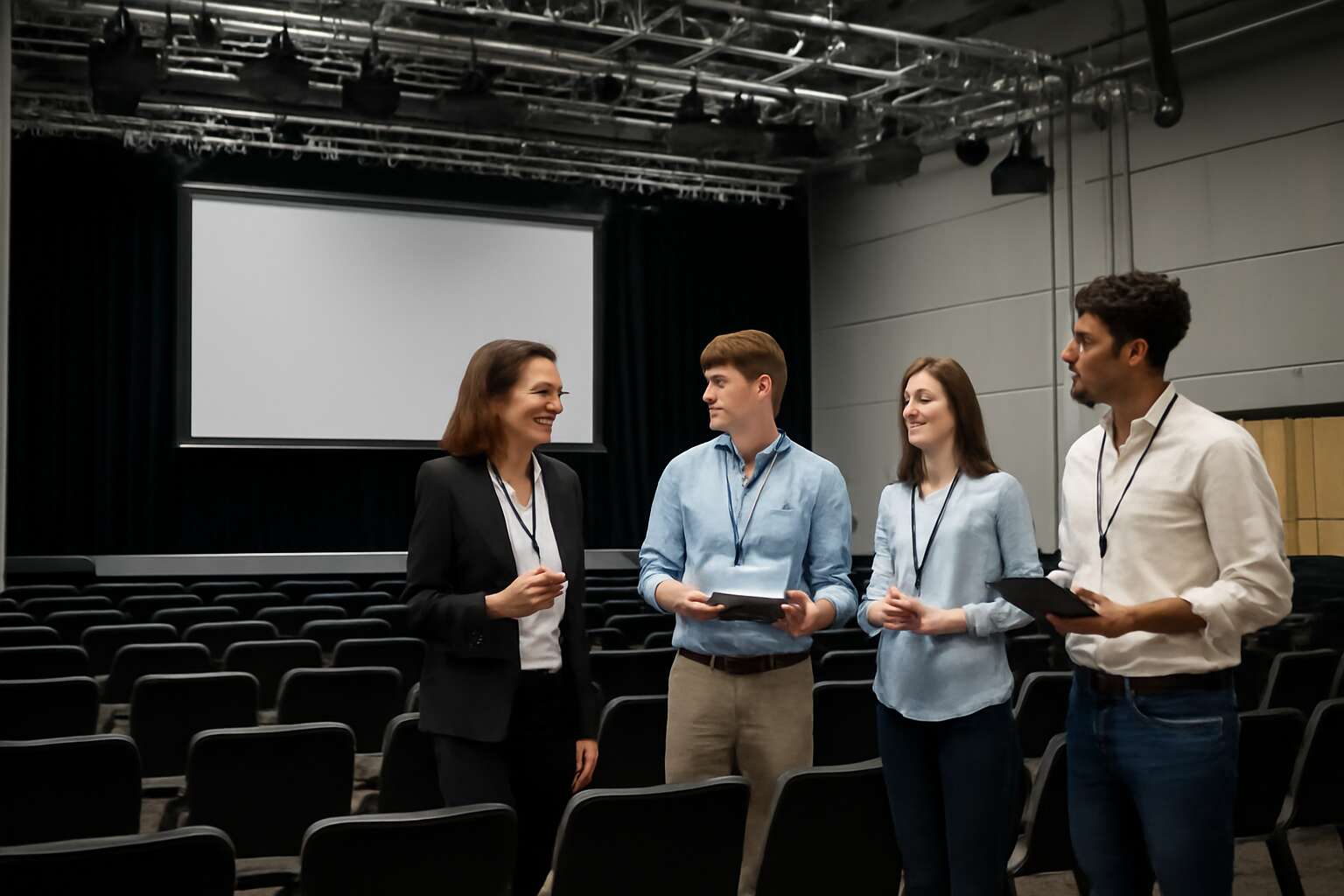
Foundations of Event Management Education
Core Principles of Event Planning
Events are more than moments; they’re social contracts with attendees. In the event management 2nd semester, students learn how a solid foundation turns a raw idea into a coordinated experience. A veteran planner once said, ‘Plan with purpose, then let the audience write the memory.’ Powerful stuff. This approach begins with clarity—defining the purpose, audience, and measurable outcomes, then aligning resources across time, staff, and spaces in South Africa’s vibrant venues.
Foundations of Event Management Education rest on core principles of event planning. They equip practitioners to anticipate challenges, manage stakeholders, and deliver consistent results. Key elements include:
- Purpose and scope clarity to guide decisions
- Transparent stakeholder communication and collaboration
- Rigorous budgeting, risk assessment, and contingency planning
When taught in a South African context, these pillars connect theory to practice and prepare graduates for real-world events that inform, entertain, and mobilize communities.
Roles and Responsibilities in Event Management
“Roles define resonance; without clear duties, even the grand idea falters.” In the event management 2nd semester, I’ve watched students learn how responsibility threads through every decision, from a campus quad to a Cape Town waterfront stage.
Foundations of Event Management Education frame the roles and responsibilities that keep a plan coherent. Students adopt a mini-consultancy model, mapping duties to real-world contexts: client liaison, logistics and operations, risk and safety oversight, sponsorship, and communications, plus budget governance. This deliberate structuring ensures graduates can navigate SA venues with poise and a touch of humour.
- Project lead coordinating timelines and stakeholder expectations
- Logistics and operations manager ensuring venue readiness
- Risk, safety, and contingency officer planning for disruptions
- Communications and sponsor relations for transparent messaging
Clarity, accountability, and a dash of social awareness—these are the hallmarks of a well-educated planner in South Africa’s vibrant events ecosystem.
Key Stakeholders and Collaboration
Foundations of Event Management Education begin with people, not plans. In the event management 2nd semester, classrooms center on the right partners: students, campus services, local vendors, and community leaders. A striking 78% of campus events hinge on stakeholder collaboration, turning vision into shared action.
- Students and project teams
- Faculty and program coordinators
- Campus services (AV, logistics, facilities)
- Local vendors and sponsors
- Community groups and authorities
- Venue managers and city partners
Such collaboration cultivates clarity and warmth across SA’s vibrant events scene. This shared work keeps campuses and communities connected, from the quad to the waterfront, with poise and heart.
Ethics and Sustainability in Events
Across South Africa, ethics and sustainability are no longer add-ons to events; they are the compass by which decisions are measured! In the event management 2nd semester, decisions weigh social impact as heavily as logistics. A recent SA study shows 68% of campus events now include sustainability checks, proving care can coexist with ambition.
- Transparency in sourcing and budgeting
- Inclusivity and accessibility for diverse audiences
- Environmental stewardship and waste minimization
These principles shape collaborations among students, campus services, local vendors, and community partners, crafting occasions that feel meaningful and humane. Ethics and sustainability become visible in how vendors are selected, audiences are welcomed, and legacies extend beyond attendance.
Curriculum Alignment for the Second Semester
Learning Outcomes and Competencies
In the dynamic world of events, the second semester is where visions refine into executable plans. A vibrant campus, real-world briefs, and a culture of ready-to-deploy ideas converge to shape tomorrow’s planners. As one veteran planner often says, ‘plans without people are merely ideas’.
Curriculum alignment ensures learning outcomes map directly to competencies industry hiring managers expect. Students move from concept to execution, mastering budgeting and timelines, with a sharpened eye for risk management.
- Applied budgeting and resource allocation
- Stakeholder communication and coordination
- Compliance, permits, and safety planning
- Digital event technologies and data analytics
In South Africa’s diverse event landscapes, this approach blends reflective practice with hands-on learning, preparing learners to navigate cultural nuance and regulatory realities with poise. This alignment mirrors the event management 2nd semester curriculum in many South African institutions.
Course Mapping to Industry Standards
Across South Africa’s vibrant venues, the event scene rewards plans that breathe as surely as they dream! The event management 2nd semester curriculum is designed to map learning directly to industry standards, pairing reflective practice with practical execution. By aligning with SAQA and national qualification frameworks, students travel from ideas to deployable concepts with confidence, ready to meet employer expectations in a richly diverse landscape.
Key alignment touchpoints include:
- SAQA/NQF credit alignment and assessment standards
- Industry skill standards guiding event roles and responsibilities
- Work-integrated learning credits and employer partnerships
With this robust curriculum alignment, the program equips learners to navigate cultural nuance and regulatory realities with poise.
Assessment Methods and Projects
“Plans survive only when reality arrives on site,” a veteran planner reminds us. In the event management 2nd semester, assessment methods are designed to turn ideas into deployable concepts. The curriculum anchors every task in SAQA-aligned standards, ensuring assessments reflect genuine industry rhythm.
Assessment methods blend ongoing reflection with tangible deliverables. A typical second-semester project portfolio may include:
- Live event simulation with end-to-end planning and on-site execution
- Reflective journals linked to decision logs
- Group capstone proposal evaluated against industry rubrics
- Work-integrated learning reflections and employer feedback
These aligned assessment routes extend beyond grades, weaving professional practice into every learning moment. By mapping tasks to NQF levels and employer expectations, the second-semester framework supports learners as they navigate regulatory nuance and cultural complexity on South Africa’s unique event stages.
Timeline and Syllabus Breakdown
A calendar isn’t mere decoration; in South Africa’s vibrant event landscape, it acts as a living test for every idea. “The calendar is a contract with reality,” a veteran planner reminds us. For event management 2nd semester, curriculum alignment turns bright concepts into deployable concepts that hold under pressure on the ground.
Week by week, the syllabus unfolds under SAQA-aligned standards and NQF expectations, weaving regulatory nuance and cultural complexity into practical tasks—policy briefings, budgeting drills, and stakeholder simulations. A concise timeline supports deliberate progress, with milestones that keep pace with local venues, public safety codes, and audience diversity.
- Industry guest sessions that bridge theory and field practice
- Weekly skill labs focused on risk, permits, and compliance
- Portfolio milestones evaluated through external feedback loops
This rhythm makes event management 2nd semester a gateway to professional fluency in South Africa’s diverse stages.
Practical Event Management Skills and Hands-On Projects
Budgeting and Resource Allocation
Budgeting is where good event plans become deliverable realities. In the event management 2nd semester, students wrestle with practical budgeting and resource allocation, turning theory into action. It’s not about numbers alone—it’s about choices that shape experiences and communities!
Through hands-on projects, students craft budgets that cover venue, equipment, permits, and incidentals, and learn to track variances as a project unfolds. The work includes value engineering across teams, mapping resources, negotiating with suppliers, and testing contingency plans.
- Mock budget development and variance tracking
- Resource allocation mapping for staff, space, and equipment
- Vendor tender analysis and contract essentials
- On-site run-of-show budgeting and contingency planning
The approach emphasizes real-world constraints and ethical procurement. Students practice cost-conscious decision making while maintaining quality. By the end, they have a toolkit to steer events from blueprint to real-world execution, even in diverse South African venues.
Vendor and Venue Management
In the real world of event management 2nd semester, you learn that mastery isn’t about memorizing checklists—it’s about turning them into action. A seasoned planner once quipped, “Great events are 90% planning and 10% improvisation,” and the SA scene proves it daily. From small venues to bustling halls, practical skills trump theory when deadlines loom.
- Vendor vetting and contract essentials tailored to SA procurement norms
- On-site coordination with staff and space management for a smooth run of show
- Hands-on contingency drills for weather, power, and access challenges
This practical focus ensures students navigate ethical procurement, vendor relationships, and venue constraints with confidence, turning blueprint ideas into tangible experiences across diverse South African settings.
On-Site Event Coordination Simulations
Across South Africa’s vibrant venues, the allure of a flawless event rests on the courage to rehearse. Industry voices say 70% of on-the-day stress evaporates when teams practice on-site flows. In that sense, the program—event management 2nd semester—trains you to turn blueprints into living moments—an art as timeless as it is practical.
Hands-on on-site coordination modules might include:
- Live staff rehearsals and roles clarity
- Space management for guest flow and emergency access
- Weather, power, and access contingency drills
These projects propel students from concept to stagecraft, letting the city itself become a classroom—Cape Town sunrise to Gauteng night markets—where every role, signal, and space reveals its character.
Risk Management and Safety Protocols
Momentum builds where rehearsal becomes ritual. In the world of live events, the difference between idea and immersion is practice—the kind that makes crowds feel the space breathe. In the event management 2nd semester, practical skills emerge not as theory but as living blueprints: teams study on-site flows, align roles, and translate blueprints into performance. From Cape Town to Gauteng, classrooms become stages, and every cue carries intention.
Risk management and safety protocols thread through every decision, turning potential chaos into choreography. Students tackle on-the-ground realities with calm, decisive planning, exploring contingency frameworks, emergency routes, and respectful crowd management. Hands-on projects include risk assessment concepts and safety culture, shaping professionals who act with clarity when minutes matter.
Consider these core concepts:
- Hazard identification and risk assessment
- Clear incident reporting channels
- Evacuation routes and emergency access thinking
Technology Tools and Digital Platforms for Event Management
Event Management Software Overview
Technology tools illuminate the planning stage like lanterns along a coastline, guiding planners through guest journeys, budgets, and timelines with a quiet, practical magic! In event management 2nd semester, students learn to choreograph data, streamline check-in, and craft experiences that resonate across South Africa.
An overview of event management software reveals three core pillars that keep projects moving:
- CRM and attendee engagement platforms that personalize communication
- Project management and collaboration suites that align teams in real time
- Analytics, reporting, and feedback tools that translate data into action
These digital platforms translate into operational efficiency, enhanced attendee experiences, and data-driven decision making, empowering South African events to scale with confidence and imagination.
CRM and Attendee Engagement Tools
The event management 2nd semester cohort is discovering that software is not just a tool but a backstage orchestra. A recent industry pulse put the number of attendees who value frictionless registration at 72%, a stat that prevents queues from becoming a running joke. When technology shines, even the quietest gala becomes a narrative—accessible, intuitive, and oddly charming. CRM and Attendee Engagement Tools stand at the helm, turning shards of data into a chorus of personalized touches that resonate long after the credits roll.
These tools personalize communication and streamline guest journeys, from invitation to post-event follow-up. In the South African context, local language preferences and mobile literacy shape engagement. Consider these capabilities:
- Personalised communications across channels
- Seamless check-in with mobile credentials
- Real-time, privacy-aware attendee insights
Analytics, reporting, and feedback translate data into action, letting South African events scale with confidence and imagination.
Social Media and Marketing Automation
Technology Tools and Digital Platforms arrive on stage as a celestial chorus, turning planning into performance! A 72% tilt toward frictionless registration hints at what savvy operators already know: platforms that glide people through journeys create memories, not queues. For the event management 2nd semester cohort, this is more than software; it’s my backstage orchestra where social media, marketing automation, and analytics breathe life into every invitation, reminder, and post-event moment.
- Social Media and Marketing Automation platforms that sync content calendars with live dashboards
- Mobile-first engagement tools with WhatsApp, SMS, and push notifications
- Automated attendee journeys from RSVP to post-event surveys
- Privacy-conscious analytics offering real-time insights without overwhelming guests
Across South Africa, these tools must speak in local languages, fit mobile literacy levels, and respect data sovereignty. When used with care, they transform a venue into a living story that audiences want to revisit.
Data Analytics and Metrics
Real-time dashboards cut planning friction by up to 40%, turning numbers into quick, confident decisions. In the world of event management, data isn’t just a ledger; it’s a living compass that guides invitations, pacing, and follow-up. For the event management 2nd semester, technology tools and digital platforms translate complexity into clarity, helping teams move from concept to connection with fewer blind spots.
- Real-time dashboards tracking registrations, check-ins, and session popularity
- Attendee journey analytics from RSVP to post-event surveys
- Privacy-conscious metrics that respect data sovereignty
In South Africa, these tools must speak local languages and stay readable on mobile screens, turning metrics into humane decisions rather than a spreadsheet marathon.
Industry Readiness in Event Management Careers
Internship Preparation and Applications
South Africa’s vibrant events landscape is waking with renewed ambition—the kind that makes a room shimmer before the first guest arrives. The event management 2nd semester is not merely an academic sequence; it’s a passport to backstage mastery, where nerves settle into rhythm and ideas become unforgettable experiences.
Industry readiness is built in conversations as much as coursework. In this phase, students weave empathy, precision, and improvisation into a single thread. I’ve watched ambitious interns turn tight timelines into graceful milestones, and that trust—earned in the small hours of planning—opens doors to internships and early career collaborations. The season of event management 2nd semester also asks for reflective practice.
Applications become stories when they reveal both craft and character. A thoughtful portfolio, strong references, and a narrative about your South African context can set you apart in a crowded field that values local rhythm and heart.
Case Studies from Real Events
‘Great events are built in the margins,’ a seasoned South African planner likes to say. The event management 2nd semester tests that truth: preparation quietly sets the tempo long before guests step through the door.
Real events offer instructive case studies of industry readiness.
- In a coastal city festival, a sudden downpour triggered an emergency rain plan, swift sheltering, and multi-channel announcements that kept crowds calm.
- At a national conference, cross-team alignment across venues and streaming feeds preserved the flow even when schedules shifted.
- During a fundraising gala, attendee routing and supplier substitutions under pressure highlighted the value of flexible on-the-ground leadership.
These narratives connect classroom theory with on-the-ground nerve and triumph, illustrating the practical heartbeat of event management!
Networking and Professional Bodies
Across South Africa, a strong network is as valuable as a tidy budget. From my work in the field, 72% of event professionals say professional bodies and peer networks propelled their careers.
Industry readiness means more than studying; it’s about showing up—attending chapter meetings, volunteering, and participating in standards discussions that shape how events run in cities from Cape Town to KZN.
- Joining a local or national event association
- Attending chapter meetings for practitioner insights
- Volunteer work to gain hands-on experience
- Contributing to forums or publishing brief notes
Networking moves through relationships, mentorship, and ongoing learning; these are the wind in the sails for a career in event management.
In the context of event management 2nd semester, industry readiness and networking become the core pivot.
Portfolio Development and Capstone Projects
In South Africa’s buzzing events landscape, a portfolio acts as a passport more valuable than any tidy budget. Among professionals, 72% acknowledge professional bodies and peer networks propelling careers.
In the event management 2nd semester, industry readiness crystallizes as portfolio development and capstone projects. Your work becomes the living argument for your capacity, a map from concept to consequence.
- Capstone project narratives that reveal end-to-end thinking, stakeholder negotiation, and risk awareness
- Curated case studies from simulated or real events with measurable outcomes
- Reflective analyses translating theory into practice and personal growth
These artifacts are not hoarded but shared—through mentor reviews, class showcases, and publications that position you within South Africa’s vibrant event ecosystem.


0 Comments