
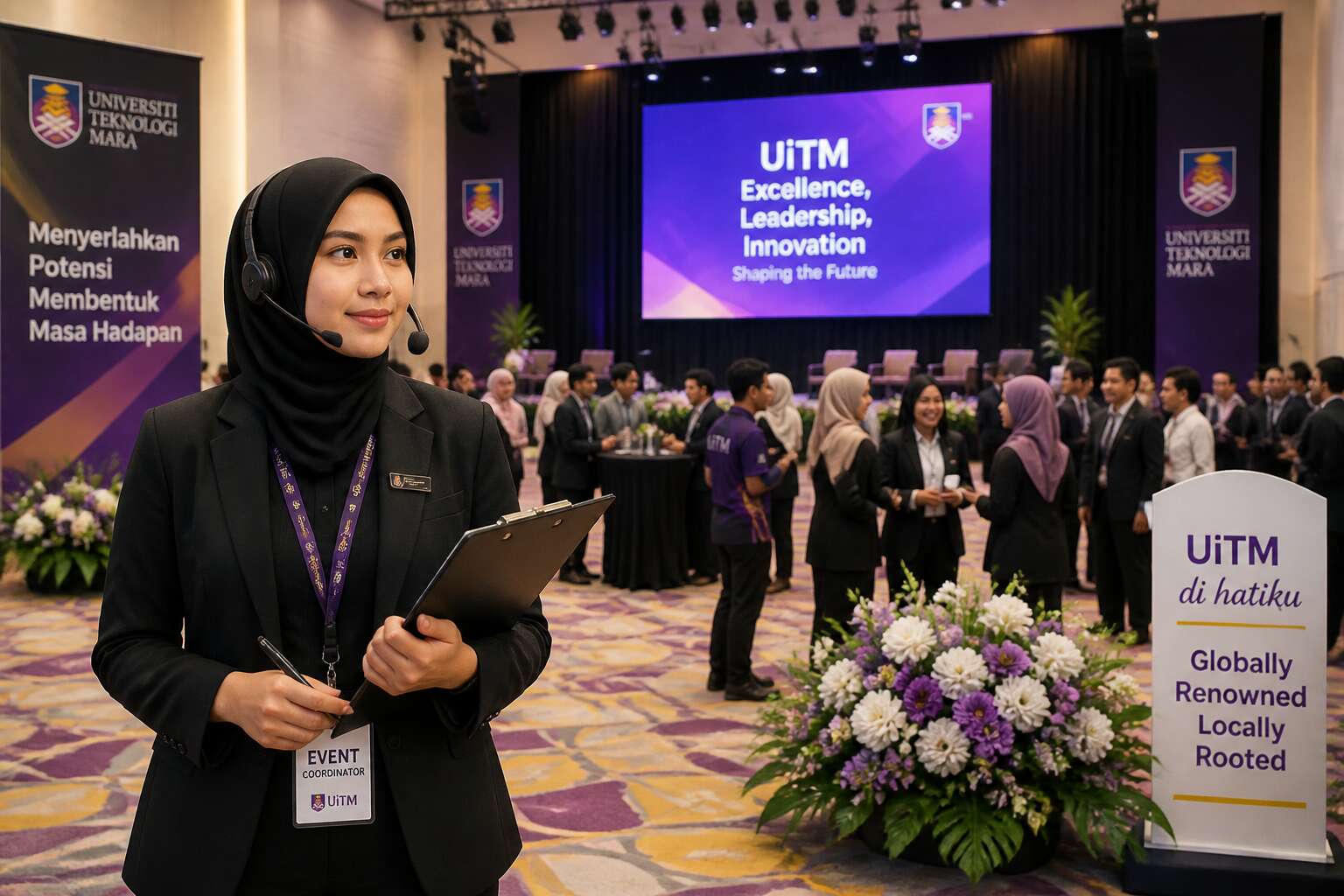
Understanding the Academic Context of Event Management at Higher Education Institutions
The Role of Student Organizations in Campus Events
Across South African universities, student-led events consume nearly a third of campus activity budgets, yet their academic scaffolding remains overlooked. I have seen this firsthand. The curriculum at institutions like Universiti Teknologi MARA, often abbreviated as event management uitm, embeds theoretical frameworks that clarify why gatherings succeed or collapse.
Student organizations serve as laboratories for this knowledge. They negotiate venue logistics, risk assessments, and stakeholder expectations before a single poster goes up. The academic context demands rigor, while organizational practice injects urgency.
- Event planning theories translate into council approvals.
- Budgetary constraints shape creative choices.
- Feedback loops refine future iterations.
This symbiosis leaves traces in every delegate list and speaker request. For event management uitm, the campus becomes a living archive of decisions made under pressure, where silence after a failed gala still echoes in meeting minutes.
Aligning Events with University Strategic Goals
Only 18 percent of campus events link to institutional performance targets. That survey of South African universities explains why strategic alignment dominates this discipline.
The academic context for event management uitm is not abstract theory. It shows up in benefit assessment forms and budget variance reports.
University strategic goals, from research visibility to community partnerships, become the basis for every event decision. When a gala dinner aligns with a donor engagement plan, I see the result in next year’s funding. A cultural festival ignoring the transformation agenda disappears from the calendar.
This process requires patience! It demands reading policy documents. It rewards those who map events to measurable outcomes.
- Identify the university’s top three strategic priorities.
- Design event activities that directly support each priority.
- Document outcomes in the university’s reporting cycle.
For event management uitm students, this is the core skill. Without it, events lack purpose. With it, events produce results.
Overview of Event Management Courses and Certifications
Few students enter university event management courses expecting to confront moral questions. Yet the academic context at higher education institutions demands exactly that. Event management uitm programmes treat theory as the foundation for practical work, not decoration. Certification pathways, from short courses to postgraduate diplomas, ask students to sit with risk, duty, and expectation.
A certification changes how you see a room. You stop counting chairs and start reading the psychology of attendance. You notice the ethical weight of exclusion. The curriculum forces a particular honesty. It exposes the gap between what you want an event to be and what the evidence says it can be. That gap, confronted early, becomes a professional reference point. For South African students, this grounding matters. It separates professional execution from hopeful improvisation.
Event management uitm coursework pushes further into the messy reality of stakeholder trust. The classroom becomes a space where decisions carry consequences before budgets are ever signed.
Career Pathways for Event Management Graduates
The gulf between managing a birthday party and strategizing a university conference is immense. Event management uitm programmes exist to navigate that exact distance. In South Africa, where audience expectations are specific and varied, the academic context at universities is not a theoretical echo chamber. It is a pressure test. The curriculum coldly examines human behaviour, spatial dynamics, and the hidden costs of exclusion. This context forces students to evaluate why an event exists before worrying about how it looks.
At this level, the academic foundation is built on hard disciplines that shape judgement. Students learn to balance institutional memory with fresh tactics. They grapple with logistics that can fail without warning. The academic frame provides the reference points for these moments. It trains graduates to see a festival or a corporate launch as a system of interconnected risks and rewards. The university context also validates the professional necessity of ethical practice. It shifts attention from merely managing a crowd to managing the trust that brings the crowd together. This is the core distinction of event management uitm studies: it treats the discipline as a craft with serious consequences.
The transition from this foundation to a career is startlingly direct. Graduates move into roles that require immediate competence. A quick look at the typical pathways shows the breadth of application:
- Corporate conference coordinators who handle high stakes logistics for financial institutions.
- Municipal event officers who manage public safety and community access.
- Independent wedding and private function specialists who master bespoke client control.
- Entertainment and music festival production staff who deal with crowd dynamics at scale.
These pathways are not abstract options. They are active sectors in the South African economy. The academic exposure to stakeholder theory, legal duty, and budget management creates a portable skill set. Professional event management uitm training essentially hardwires the graduate for clarity under pressure. It replaces guesswork with method. For employers, this reduces the cost of onboarding mistakes. For the graduate, it means entering a competitive job market with a defined point of view. That clarity is the difference between a successful career and a series of chaotic freelance gigs. The educational context provides a durable reference for every decision that follows. It anchors the practitioner to a standard that does not fluctuate with trends.
Core Components of Effective Event Planning and Coordination
Budgeting and Financial Management for Campus Events
The budget is where an event’s reputation is truly forged. A single miscalculation in logistics can unravel months of meticulous planning. For any large-scale campus function, the financial blueprint dictates every subsequent choice, from the venue’s size to the quality of the guest speaker. This discipline is the silent architect behind a seamless attendee experience.
Creating a workable financial structure requires a granular breakdown of every operational facet. This often begins with a clear hierarchy of anticipated costs:
1. Venue and technical production (sound, lighting, staging).
2. Security, insurance, and compliance permits.
3. Marketing materials, signage, and promotional merchandise.
4. Speaker fees, travel, and hospitality arrangements.
Each category demands a contingency reserve, typically around ten percent of the total allocation. This buffer absorbs unforeseen price fluctuations from suppliers or last-minute technical requirements. The event management uitm framework emphasizes this level of preemptive scrutiny. It transforms a simple spreadsheet into a strategic tool for risk mitigation.
Furthermore, the stewardship of funds extends beyond mere allocation; it involves a rigorous reconciliation process post-event. Monitoring cash flow against the initial projections provides invaluable data for future iterations. This forensic approach to spending, while arduous, prevents the common pitfall of overspending on aesthetics while underfunding essential services. The true measure of success lies in the balance between financial prudence and the delivery of a memorable, polished experience.
Venue Selection and Logistical Considerations
The venue is the first handshake with your audience. Its architecture, acoustics, and access points dictate the rhythm of the entire day. For a campus event, the physical space can elevate or undermine every other effort. Event management uitm emphasizes a forensic review of these details before any contract is signed. I have witnessed promising gatherings falter due to poor sightlines or inadequate power supply.
Consider the practical elements that shape attendee flow:
- Entry and exit routes for crowd movement
- Backstage space for speakers and technical crew
- Accessibility compliance for disabled guests
- Proximity to parking and public transport
Each component requires a site visit at the same hour as your event. Lighting changes, noise levels from adjacent buildings, and queue behavior all shift by time of day. The logistical plan must match the venue’s true capacity, not its advertised number. This precision is what separates a smooth execution from a chaotic scramble.
Vendor and Supplier Relationship Management
Behind every seamless campus event stands a roster of suppliers whose names appear nowhere on the programme. The caterer, the tent hire firm, the sound technician. Their reliability determines whether your audience remembers the keynote or the twenty minute wait for refreshments.
In event management uitm, vendor relationships are treated as partnerships rather than transactions. A supplier who understands your institution’s quirks, from loading bay schedules to faculty parking protocols, becomes an extension of your team.
The practicalities demand attention: delivery windows that respect campus quiet hours, contract clauses covering load shedding contingencies, payment schedules that honour municipal procurement timelines. Each interaction builds a ledger of goodwill. I have seen that ledger rescue an event when a marquee arrives late or a generator fails.
Risk Assessment and Contingency Planning
A campus coordinator once told me a plan is only as good as the first failure it survives. In event management uitm, core planning centres on defining objectives, mapping timelines, and clarifying responsibilities before any booking is confirmed. Coordination converts that blueprint into working rhythm across departments, suppliers, and volunteer teams. A concise checklist keeps everyone aligned:
1. Confirm venues, access points, and permit requirements.
2. Verify equipment inventories and communication channels.
3. Outline emergency contacts and escalation paths.
Risk assessment builds on that foundation rather than waiting for problems. South African events contend with load shedding, storm damage, and last minute venue changes. Contingency planning therefore specifies backup power, alternate dates, and clear decision authority. Each scenario gets rehearsed before the day arrives, with staff knowing who speaks and what triggers relocation. This structured foresight is what professional event management uitm looks like behind the scenes.
Marketing and Promotion Strategies for Maximum Attendance
Attendance begins with the first schedule, not the first poster. Effective event planning relies on coordination. Clear objectives, an agreed timeline, and explicit role definitions form the operational core. Every stakeholder must know what to deliver and by when. I have seen teams stall when one person assumed another handled the microphones!
Marketing and promotion require early and honest outreach. Segment your audience, then craft messages for each group. Use teaser content to build curiosity before the official announcement. A focused campaign through owned channels often outperforms scattered ads.
Promotion levers:
- institutional newsletters
- campus social media takeovers
- direct outreach to student societies
Each lever reinforces attendance. When coordination and promotion work together, event management uitm produces packed venues without last minute scrambling.
Leveraging Technology to Enhance Event Experiences
Digital Tools for Registration and Ticketing
Ghosts of long queues and lost paper forms still haunt the corridors of many campus events, but the modern event management uitm environment has exorcised them with digital registration and ticketing platforms. These tools do more than process payments. They capture attendee data, track entry in real time, and send automated confirmations that ease the worry of a forgotten ticket. For students and staff, the benefit is immediate: a mobile QR code replaces a flimsy stub, and check-in becomes a matter of seconds.
Consider what a digital check-in system offers:
– Real-time attendance tracking that feeds directly into event metrics.
– Reduced no-show rates through automated reminder messages.
– Scalable entry management whether you expect fifty or five hundred guests.
The ease of use matters. A well-chosen platform turns a chaotic entrance into a silent, efficient gateway. In event management uitm, adopting such tools is no longer a luxury; it is a quiet necessity.
Social Media Integration and Real-Time Engagement
At a recent campus conference, a single tweet redirected the entire conversation. That moment captures what social media integration means for event management uitm. Attendees no longer sit passively. They react while the programme unfolds.
Real-time engagement tools bring this digital chatter to the front of the room. A live social wall gives participants a shared sense of presence. Moderators surface questions from feeds, letting remote voices shape the session.
- Live polling that adjusts session flow
- Hashtag curation to group conversations
- Instant Q&A from audience posts
Each feature adds immediacy. These tools provide measurable feedback, letting organisers track sentiment and count mentions. The event adjusts based on that feedback.
Overcoming Common Challenges in University Event Management
Managing Limited Resources and Tight Deadlines
Every event management uitm coordinator knows the quiet panic of a venue booking confirmed hours before move-in. Limited resources force a kind of honesty. You learn to distinguish the essential from the decorative. Tight deadlines strip away pretense, revealing what your team actually values.
In my experience, resilient plans rest on three principles:
- triage the must-haves against the nice-to-haves
- communicate every constraint to stakeholders early
- assign ownership with zero ambiguity
The psychological weight is real. When you cannot control the clock, you control your own attention. This is not about heroic effort. It is about conceding that perfection is a luxury. The practical outcome is a schedule that survives first contact with reality.
Navigating University Bureaucracy and Approval Processes
A university event lives or dies in the approval queue. In South Africa, the average campus event requires sign-off from three separate departments. For event management uitm, the process tests patience as much as planning.
Approval chains are rarely linear. A student leader submits a proposal, then waits. The registrar wants risk forms. The facilities office wants floor plans. The finance office wants cost codes. Each department speaks its own language. You become the translator. This is where event management uitm students learn the unglamorous side of their craft.
Common hurdles include:
- Outdated forms that do not match current policies
- Gatekeepers who lack authority to approve
- Silent rejections when emails go unanswered
A single missing signature can halt an event for weeks. The bureaucracy has its own rhythm. Those who respect it move faster than those who fight it.
Ensuring Participant Safety and Emergency Preparedness
When the lights go out and a thousand students surge toward one exit, panic becomes a language everyone speaks! Emergency preparedness is not a checklist. It is a promise, and for event management uitm, that promise gets tested under pressure.
The real challenge is the distance between a plan on paper and a plan in practice. Volunteers assigned to first aid often miss the briefing. Security stands at the wrong gate. I have seen a fire drill dissolve into chaos because nobody knew who called the shots.
Clear protocols fix this:
- Assign roles by name, not by title.
- Mark exits with both light and sound.
- Designate one point of contact for every responder.
The difference between a scare and a catastrophe is often a single unguarded staircase.
Dealing with Unexpected Changes and Last-Minute Issues
Unexpected changes often arrive at the worst moment. A keynote speaker cancels two hours before doors open. The catering truck breaks down on the N1. For event management uitm, these moments define the team’s character more than any plan.
I have learned to build buffer time into every schedule. Not a vague cushion, but specific windows assigned to each supplier and volunteer. When something shifts, the buffer absorbs the shock. Communication must stay simple and direct. One WhatsApp group for key personnel beats ten email chains.
Keep decisions moving and document every change as it happens. A backup list for each critical element, from power supply to printed name tags, turns panic into procedure. When the venue changes at the last minute, a pre-checked alternate layout saves hours.
Measuring Event Success and Gathering Feedback
Measuring event success often proves more difficult than the planning itself. Attendance numbers tell one story; the quality of engagement tells another. For event management uitm practitioners, the challenge is designing feedback mechanisms that capture both dimensions without burdening participants. A rushed form completed in the final five minutes yields superficial answers, so timing matters as much as wording.
I have found that embedding feedback moments throughout the event changes the result entirely. Short pulse checks at session breaks, quick polls during registration, and informal conversations with student attendees offer texture that post-event surveys miss. Still, I rely on formal instruments for comparability across different events.
- Net promoter scores from student attendees
- Staff observations recorded against a standard rubric
- Resource spend versus projected budget variance
The real challenge is interpretation. For event management uitm, success is never a single number but a composite of lived experience, learning outcomes, and operational efficiency. Feedback only becomes valuable when someone sits with the results and separates signal from noise.
Balancing Multiple Stakeholder Expectations
No two stakeholders attend the same event, even when they share one auditorium. For event management uitm, balancing multiple stakeholder expectations is an exercise in deliberate foresight. Students want energy and authenticity. Faculty want measurable learning outcomes. Sponsors want visible return on investment. Administrators want operational control. Each of these demands collides with the others.
- Address students first in the planning phase.
- Align faculty goals with session design.
- Negotiate sponsor visibility without compromising content.
- Document administrative constraints early.
I have found that separate pre-event conversations, rather than group meetings, prevent power imbalances from distorting priorities. When each stakeholder hears their specific concerns repeated back to them, the event management uitm team transforms conflict into coordination.
Best Practices for Sustainable and Inclusive Event Design
Incorporating Eco-Friendly Practices into Event Operations
The global events industry produces 2.5 million tonnes of waste every year. For students pursuing event management uitm, that number should spark action. Sustainable design begins with venue choices, favouring spaces with natural ventilation and reliable public transit links. Inclusive design requires more than accessible entrances. It calls for calm corners for neurodivergent guests, adjustable lighting for photosensitivity, and sign language interpreters for deaf attendees. Eco-friendly operations reshape catering through plant-forward menus sourced from local farms. Composting bins with visual guides simplify waste sorting. Digital programmes replace printed schedules, saving trees and printing costs. A few adjustments create meaningful impact:
- Use reusable cups with a deposit system
- Delegate a green team to monitor energy use
- Offer virtual attendance options for remote participants
These choices define the next generation of event management uitm, where sustainability and inclusivity drive every operational decision.
Accessibility and Accommodations for Diverse Audiences
One in six people worldwide lives with a disability, yet most event venues still cater to a narrow slice of humanity. For students of event management uitm, accessible design is the foundation of every seating chart, stage height, and digital invitation.
Accommodation begins before the doors open. Publish sensory maps that show quiet zones and bright corridors. Offer reserved seating for wheelchair users with unobstructed sightlines. Provide live captioning for deaf attendees as a standard feature.
- Install induction loops for hearing aids
- Use high contrast signage with tactile elements
- Train volunteers to guide neurodivergent guests
These protocols transform a lecture into a gathering where every person can participate fully. That is the measure of success for any event professional.
Fostering Student Leadership and Volunteer Engagement
At an event management uitm conference, I have seen sustainability and inclusion treated as separate checklists. They are the same discipline. When students hold real decision making power over waste streams and sensory access, they learn to see events as living systems. Volunteer roles should rotate across production, accessibility, and zero waste teams so no one becomes a passive helper.
- Assign student leads to oversee water refill stations and quiet room protocols.
- Require each volunteer to shadow a different role each cycle.
- Let students audit the event’s carbon and comfort impact afterward.
This is how leadership becomes an instinct, not a title! Every act of design, from the height of a sign to the texture of a floor, teaches someone that they are responsible for the whole.
Post-Event Evaluation and Continuous Improvement
An event is never finished on the final day. The evaluation phase exposes whether sustainability and inclusion held up under real pressure. For anyone studying event management uitm, this is where theory meets reckoning.
Post-event reviews must go beyond attendance numbers. They should measure the entire lifecycle of the event.
1. Waste streams: what actually got recycled versus what went to landfill
2. Accessibility: which accommodations were used and which failed
3. Volunteer energy: who burned out and who thrived
4. Comfort: how many people used the quiet rooms and why
I have found honest evaluation requires distance. Wait 48 hours, then gather students, staff, and attendees. Map every finding to a specific change for the next cycle. In event management uitm contexts, this loop is often weak. The same mistakes repeat. That is not a failure of effort. It is a failure of documentation. Continuous improvement lives in the details.


0 Comments