
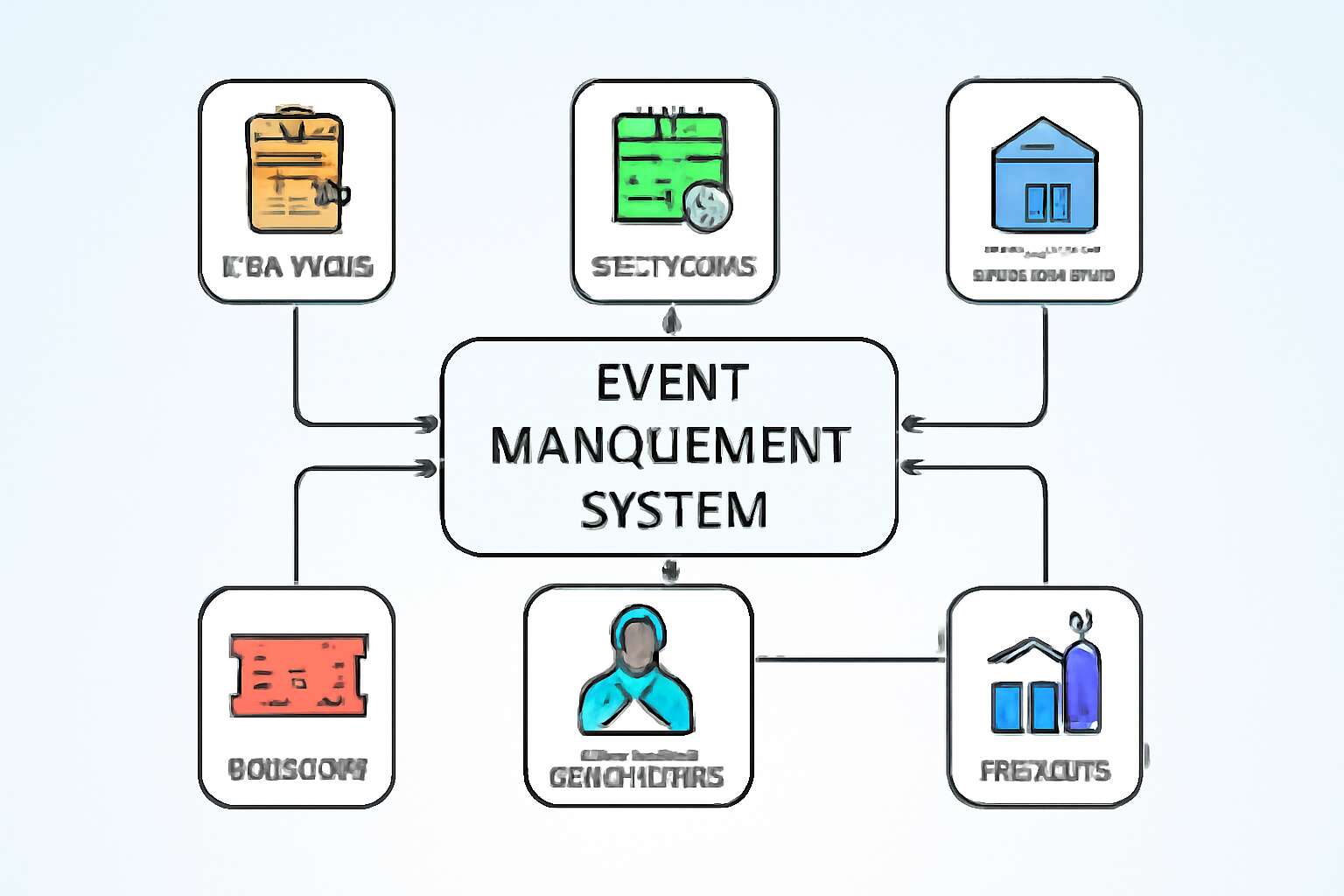
Core Components of an Event Management System
Event Registration and Ticketing
The event management system block diagram isn’t just a drawing—it’s the heartbeat of your event. In South Africa, 68% of organizers report faster check-ins when registrations flow through a single system. That diagram stitches people, processes, and platforms into a single, humming nerve that can make or break an experience.
Core components form the spine of the workflow, and event registration and ticketing sit at the center. When a guest signs up, a ticket materializes, payments lock in, and the attendee list updates in real time. On game night, the chain holds; the crowd moves; the night sings!
Key elements include:
- Registration and ticketing engine
- Secure payments
- Attendee management and CRM
- Real-time reporting and analytics
Scheduling and Venue Management
Scheduling and venue management are the heartbeat and compass of the event management system block diagram, turning scattered plans into a living map. A single, lucid timetable threads stages, rooms, and access into a coherent narrative. “A well-tuned schedule is the spell that keeps a crowd engaged without stifling spontaneity,” says a veteran planner. It turns chaos into choreography. In South Africa’s bustling arenas, this core component translates ambition into dependable, on-the-ground reality.
Key elements include:
- Interactive availability calendars
- Venue allocation and floor plans
- Resource and equipment management
- Real-time capacity and crowd-flow analytics
When these elements align, spaces breathe with purpose and timing— orchestrating a seamless experience that resonates from entrance to exit, all while fitting neatly into the larger fabric of the event.
Attendee and Participant Management
Crowds remember moments more than metrics, and in South Africa’s vibrant venues, attendee management is where memory meets precision. Automation has cut check-in times by up to 40%, turning fluttering anticipation into immediate engagement! The event management system block diagram places the attendee at the center, guiding permissions, preferences, and pathways with quiet elegance.
Within this core are the levers of connection and care:
- Real-time check-in and badge validation
- Personalised agendas and session reminders
- Secure access control and attendee data management
- Multichannel communications and opt-in preferences
Behind the glamour, the data tells a story—seamless transitions, respectful privacy, and adaptive crowd flow. In the event management system block diagram, these elements sing in harmony with the broader canvas, shaping experiences from arrival to departure.
Vendor and Supplier Management
In the rhythm of events, vendors stand as the silent chorus behind every moment. “The best events are a choreography of trusted partners,” a seasoned South African planner often notes. Within the event management system block diagram, vendor and supplier management form the backbone that keeps schedules tight and budgets honest. This core links procurement, contracts, and risk into a single, quiet stream humming beneath the spotlight.
The components bloom through deliberate onboarding, performance dashboards, and discreet compliance controls. The core levers include:
- Vendor onboarding and qualification
- Contract and SLA management with version control
- Performance monitoring, risk assessment, and contingency planning
On South Africa’s vibrant stages, transparency speeds delivery, memory stays pristine, and partnerships stay secure. All this feeds the diagram’s harmony, turning procurement into a trusted rhythm from sourcing to fulfillment.
Data Flow and System Architecture
Data Sources and Ingestion
Data is the quiet weather that shapes every successful gathering. In South Africa’s vibrant events scene, data-driven planning cuts friction by as much as 25%, turning chaos into choreography. When teams study the event management system block diagram, the data flow becomes the heartbeat behind every decision.
From sources to streams, data enters the system through diverse channels.
- Online forms and mobile captures from participants
- Payment gateways and invoicing streams
- Venue sensors and badge-scanner feeds
- CRM and marketing platforms weaving insights
Data ingestion and system architecture translate that raw chatter into usable signals. Real-time streams mingle with batch uploads, APIs knit disparate systems, and governance ensures privacy. This map shines when it shows data lineage, storage, and retrieval in a single, comprehensible tapestry.
Numbers become music, guiding organizers from dawn to encore in a country where hospitality meets imagination!
Processing and Orchestration
In South Africa’s bustling events scene, 72% of organisers credit smooth data flow with smoother experiences. This is the cleft between chaos and choreography—the event management system block diagram makes it visible.
- Real-time processing ensures immediate responsiveness for badges and queues
- Batch ingestion supports nightly reconciliations and reporting
- APIs knit disparate systems for a seamless information tapestry
Data travels from online forms, mobile captures, venue sensors, and CRM into real-time streams and batch uploads; the orchestration layer schedules tasks, enforces privacy, and preserves data lineage.
Governance keeps privacy intact, and the map shines when data lineage, storage, and retrieval align in a single, comprehensible tapestry.
Data Modeling and Storage
A pulse of data threads through every moment of a live event. Across South Africa’s vibrant scene, 72% of organisers credit seamless data flow with smoother experiences. The event management system block diagram becomes a map of this choreography, revealing how the crowd, the badges, and the schedules move in concert—I watch the data dance as it happens.
Data modeling anchors this map. A hybrid design pairs transactional schemas for accuracy with a flexible data lake for agile analysis, all kept in check by clear retention and privacy rules. Storage choices support both real-time decisions and deep retrospectives, preserving data lineage as it travels.
- Transactional databases for current bookings and state
- Data lakes for raw forms, sensors, and interactions
- Analytics warehouses for trends and reporting
In this architecture, data flows drift between streaming and batch, and the orchestration layer choreographs privacy, access, and lineage. The elegance of the event management system block diagram lies in its clarity of data movement across teams and sensors.
API Layer and Integrations
Like a drumbeat guiding a festival, data moves through live moments with clarity. In South Africa’s vibrant event circuit, 72% of organisers credit seamless data flow with smoother experiences. The event management system block diagram becomes the conductor’s baton, marking how streams from ticketing and sensors synchronize in real time. Data flows balance streaming with batch processing, while privacy rules keep the tempo honest.
At the API layer, clean contracts bind REST or GraphQL endpoints, authentication, and policy-driven access. Integrations connect payments, CRM, and analytics; a message bus keeps event streams traceable. I watch the layers harmonize amid change!
- API Layer: REST/GraphQL, versioning, security
- Integrations: payments, CRM, analytics
- Orchestration: event bus, retries, monitoring
From this vantage, data lineage travels across dashboards—visible rather than opaque. The event management system block diagram becomes a living blueprint of flow, balancing speed with governance and speaking to South Africa’s digital future.
User Roles, Access, and Experience
Administrative Roles and Permissions
“Chaos is the canvas where order learns to sing,” a line that rings through South Africa’s event corridors. In the event management system block diagram, the lifeblood of any gathering flows from user roles that grant light and shadow to the workflow.
User roles sculpt who can view, draft, approve, or publish itineraries, budgets, and guest lists. Access controls are the compass; experience is built through administrative permissions that tailor dashboards, alerts, and audit trails to each actor: organizers, venue teams, sponsors, and volunteers alike.
- Role-based dashboards
- Granular permissions
- Approval workflows and audit trails
Within the event management system block diagram, these permissions transform error-prone chaos into choreography, preserving security while granting the right eyes to the right tasks. The rhythm of a well-governed event becomes a story you can hear and trust.
Organizer and Planner Experience
South Africa’s events scene hums with energy, and precision is the secret fuse. The event management system block diagram maps who sees what, when, and why—turning potential chaos into choreography. Role-based access shapes who can view itineraries, approve budgets, or manage guest lists, guiding the flow with intent.
Organizers and planners deserve an experience that feels crafted for them—clear dashboards, guarded data, and a rhythm that respects deadlines.
- Role-based dashboards surface relevant tasks to organizers, while shielding confidential details from guests and volunteers.
- Granular permissions let planners draft and approve schedules, budgets, and guest lists without bottlenecks.
- Approval workflows paired with audit trails keep every change traceable, promoting trust across teams.
From risk to relief, the right eyes and the right rules compose an experience where the event unfolds with calm momentum. In the end, the event management system block diagram choreographs human judgment and automation into one reliable cadence.
Attendee Portal and Engagement
In South Africa’s fast-paced events circuit, a single misread permission can derail an evening. The event management system block diagram acts as a conductor, clarifying sightlines and responsibilities. When roles are crystal, the room breathes; when they aren’t, chaos whispers from the wings.
User roles determine what each player sees and does—from organizers to volunteers. I watch role-based dashboards surface the right tasks, while granular permissions keep sensitive data locked away. Approvals leave a clear audit trail, so every decision has a traceable heartbeat.
Attendee Portal and Engagement turn guests into active participants. The portal offers schedules, venue maps, RSVP status, and live polls—creating a personal, connected experience that respects backstage controls.
- Personalized agendas accessible on any device
- Live polls and Q&A to boost interaction
- Notifications tailored to attendee interests
With the right wiring, the audience feels seen while behind-the-scenes teams stay in cadence—the event unfolds with supernatural ease.
On-site Operations and Staff Tools
South Africa’s fast-paced events circuit rewards clarity. A misread permission can derail an evening, costing momentum and memory. The event management system block diagram acts as a conductor, translating roles into sightlines and responsibilities, so the room breathes rather than stumbles.
User roles determine what each player can see and do—from organizers to volunteers. Role-based dashboards surface the right tasks, while granular permissions lock sensitive data away. Approvals leave a clear audit trail, ensuring every decision has a traceable heartbeat.
On-site operations thrive when the experience remains seamless for attendees and efficient for staff.
- Check-in tablets and badge printers
- Live staff communications hub and headset links
- Real-time incident reporting and task assignment
With the block diagram guiding on-site operations and staff tools, events unfold with quiet, intentional cadence across venues in SA.
Integration, Security, and Performance
Third-party Integrations and Plugins
Industry surveys show 63% of event tech projects stall due to clunky integrations. In the event management system block diagram, integration is the backbone, not the garnish. When third-party integrations and plugins glide, schedules don’t crumble and ticket issues vanish!
- Local payment gateways such as PayFast and PayGate
- CRM and marketing platforms like Salesforce or HubSpot
- Analytics, ticketing analytics, and on-site scanning tools
Security isn’t a feature; it’s a posture, and I treat it like a daily ritual. Tokenization, TLS, OAuth, and least-privilege access keep data safe as a Cape Town winter breeze. Each plugin should be vetted, sandboxed, and monitored, because a single compromised widget can derail an entire event.
Performance is the quiet workhorse. Async processing, caching, and edge delivery keep the user experience snappy even in rushes. The block diagram respects plugin payloads and avoids creeping latency during peak moments in SA venues.
Security and Compliance
63% of event tech projects stall due to clunky integrations. In the event management system block diagram, integration is the backbone, not garnish. When third-party plugins and native modules speak the same language, schedules stay tight and tickets flow. I design with clean APIs and sandboxed pilots before a live run!
Security isn’t a feature; it’s a posture. I treat it as a daily ritual—tokenization, TLS, OAuth, and least-privilege access guard every data gesture. Each plugin earns vetting and monitoring, because a single compromised widget can derail the event. POPIA-ready data handling keeps trust intact.
Performance and compliance are the quiet workhorses. Async processing, caching, and edge delivery keep experiences snappy even in rush moments. The block diagram respects plugin payloads and avoids creeping latency during peak moments, delivering a seamless on-site and online experience for attendees and organizers alike.
Performance and Scalability
Integration is the drumbeat behind every moment. In chaotic events, a smooth flow between apps can shave minutes off every ticket scan and update. The event management system block diagram reveals how data travels from registration to attendee engagement, stitching plugins with native modules so schedules stay tight.
- Clear API contracts and versioning
- Sandboxed pilots before live use
- Continuous plugin vetting and monitoring
Security is a daily discipline, not a checkbox. Tokenization, TLS, OAuth, and least-privilege access guard every data gesture. POPIA-ready data handling keeps trust intact.
Performance and scalability are the quiet workhorses. Async processing, caching, and edge delivery keep experiences snappy even in rush moments. The block diagram guides payloads and prevents creeping latency, delivering a seamless on-site and online experience for attendees and organizers alike in South Africa’s fast-paced event scene.
Monitoring and Analytics
Events pulse with data, and the event management system block diagram is the orchestra pit where each app finds its cue. In South Africa’s fast-paced venues, integration isn’t a luxury; it’s the air that keeps lines moving and updates arriving in real time, and I’ve seen it work. This map shows how registration, engagement, and on-site tools converse without clashing, turning chaos into coordinated moments!
Security threads through the diagram as a seam. End-to-end visibility, trusted handoffs, and disciplined data access keep trust intact.
- End-to-end traceability across modules
- Real-time anomaly detection and alerting
- Contextual access controls aligned to roles
Performance Monitoring and Analytics are the weather station for the system, translating every ping into insight. The diagram guides what to measure—latency, throughput, and error rates—so operators spot bottlenecks before they matter.



0 Comments