
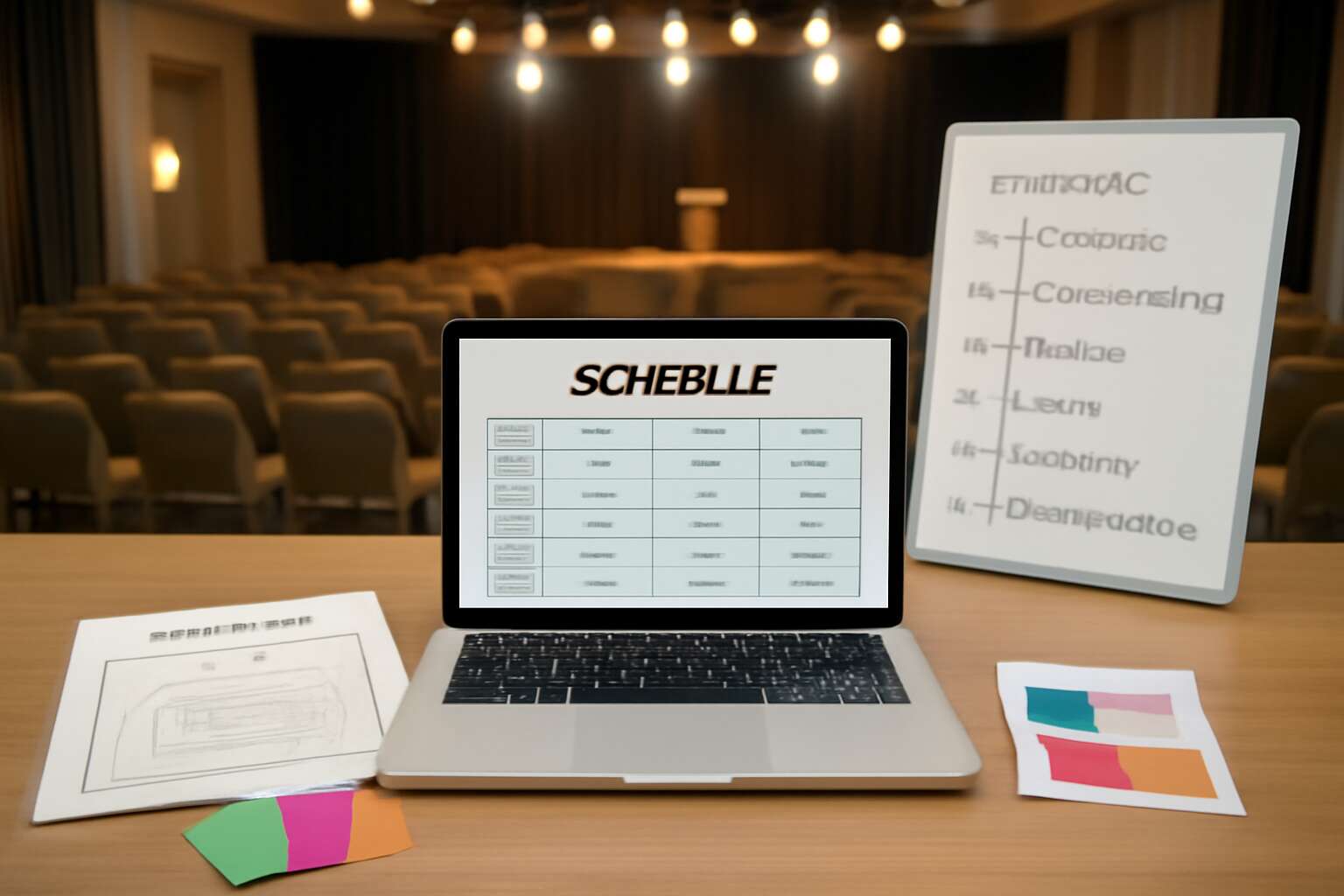
Understanding Event Management: A Clear Overview
What Event Management Covers
In South Africa, the pulse of a thriving event is measured not just by the crowd, but by the choreography behind it. Industry surveys show events with tight logistics boost attendee satisfaction by up to 70% and leave planners with fewer migraines—and more high-fives!
The event management definition is simple in theory: it’s the art and science of turning an idea into a polished experience. It covers planning, execution, and post-event reflection, from concept to cleanup, with a focus on people, places, and timelines.
- Planning and design that aligns with goals
- Vendor, venue, and on-site logistics coordination
- Budgeting, risk, and compliance to keep the show on the rails
In South Africa, that means juggling venues from urban arenas to coastal in-betweens, coordinating diverse stakeholders, and building a narrative attendees remember long after the last encore. The event management definition becomes a blueprint that threads through venues, vendors, and moments, turning chaos into choreography.
Why Event Management Matters for Businesses
Here, a single moment can echo in a brand’s memory long after the final encore. In South Africa, turning a spark of an idea into a seamless experience is both art and science—the event management definition in action: from concept to crowd with purpose and rhythm.
Why it matters for business? It shapes predictable experiences, curbs risk, and builds trust with clients, sponsors, and communities. I’ve watched teams breathe easier when the plan is clear.
- Clear goals and milestones
- Brand consistency across channels
- Post-event insights for growth
Here in South Africa, diverse venues—from urban arenas to coastal spaces—demand nimble logistics, local compliance, and a human touch that respects every listener.
This compass turns plans into memories and metrics into meaning.
Key Goals and Outcomes
A single, well-timed moment can amplify brand trust, and in South Africa, the event becomes a shared memory people remember long after the lights fade. Recent industry surveys show brands that master the event management definition enjoy up to a 28% uptick in attendee engagement. “A well-planned moment is a memory kept,” a veteran SA producer notes.
Understanding this field is more than checklists; it maps a journey from concept to crowd. The core is clarity—define goals, chart the attendee path, and plan logistics with local nuance.
- Stakeholder alignment across sponsors, venues, and vendors
- Budget discipline and transparent cost controls
- On-site orchestration that adapts to the moment
In SA, venues range from urban arenas to coastal plazas, demanding nimble compliance and a human touch that respects every listener. The event management definition becomes a compass, turning ideas into memories and metrics into growth.
Distinguishing Event Management from related disciplines
Event management unfolds as a living map, guiding ideas from spark to sensation. In South Africa, this craft threads local tempo with a universal rhythm, weaving audience touchpoints, safety nets, and moment-to-moment decisions into a coherent journey.
The event management definition sits at the core: align purpose with audience, logistics, and tempo. It distinguishes itself from related disciplines through on-site orchestration and the constant recalibration required by live momentum. Consider these anchors:
- Stakeholder alignment across sponsors, venues, and vendors
- Budget discipline and transparent cost controls
- On-site orchestration that adapts to the moment
Types of events managed (corporate, social, public, hybrid)
Moments forge brands; a well-run event makes them memorable. In the South African market, the event management definition centers on syncing purpose with audience, logistics, and tempo to create a coherent journey. Live moments demand adaptability and precision, from the opening touchpoint to the last applause.
Types of events managed include:
- Corporate events: conferences, product launches, and board meetings
- Social events: weddings, anniversaries, fundraising galas
- Public events: festivals, community markets, city-hosted celebrations
- Hybrid events: a mix of in-person and virtual experiences
Each type requires a careful balance of audience engagement, safety, and on-site momentum, with considerations unique to the South African context such as venue accessibility and local compliance.
Core Elements of Event Management: Planning, Logistics, and Experience
Strategic Planning and Budgeting
Across South Africa’s venues, 83% of attendees remember how a night unfolds more than how it shines; that is the pulse of the event management definition. The core elements—Planning, Logistics, and Experience—stand as the silent architects of memory, turning intention into atmosphere, risk into rhythm, and chaos into choreography.
Focus centers on three pillars that shape the night:
- Planning that maps timelines, scopes, and milestones
- Logistics that align venues, vendors, and flows
- Experience that choreographs pacing, mood, and engagement
Strategic planning and budgeting are the dark engines behind the spark, translating vision into resource maps, balancing ambition with reality, and ensuring every moment has a place to stand. In the best events, budgets act as a compass—allocating time, space, and talent with precision and letting the experience breathe.
Venue and Supplier Coordination
<pAcross South Africa, the night remembers its mood longer than its schedule, a quiet statistic that speaks volumes about this craft. This is the heart of the event management definition: three pillars—Planning, Logistics, and Experience—binding intent to atmosphere and turning risk into rhythm.
Planning maps timelines, scopes, milestones. It is the compass that keeps teams aligned and spectators engaged. Within Planning, key acts include:
- Timelines that breathe, not suffocate
- Clear scopes for every stakeholder
- Milestones with measurable outcomes
Logistics aligns venues, vendors, and flows, ensuring smooth transitions from welcome to final bow. Experience choreographs pacing, mood, and engagement, weaving energy with silence. Venue and Supplier Coordination—on-site schedules, contract alignment, and seamless communication—binds every thread into a single, memorable tapestry.
Registration, Attendee Experience, and Engagement
In the event management definition, a well-tuned operation feels like a myth turned real: attendance climbs and memories linger. A compelling stat anchors the magic: well-executed events boost attendee satisfaction by up to 40%. From Cape Town to Durban, core elements set the stage for a flawless journey, weaving into the overall Attendee Experience and Engagement!
Planning anchors the voyage, charting timelines and budgets; Logistics choreographs movement—staff, signage, and check-ins; Experience Registration smooths entry and data capture.
- Timeline milestones
- Vendor coordination
- Risk assessment and contingency planning
Attendee Experience and Engagement bring the narrative to life—guest journeys, interactive sessions, and purposeful networking transform spectators into participants, producing an event that lingers in memory and business impact.
Risk Management and Compliance
A flawless gathering wears the mask of ease, yet rests on a cathedral of details. In the event management definition, Planning, Logistics, and Experience are the three gilded pillars supporting moments that linger long after the lights fade in venues from Cape Town to Durban.
Planning anchors the voyage—timelines, budgets, and resource choreography. Logistics choreographs movement—staff, signage, check-ins, and the flow of guests. Experience shapes the attendee journey through sessions, networking, and ambient touches that convert spectators into participants!
- Permits and licensing
- Health and safety protocols
- Data privacy and registration security
- Insurance and contracts
Risk management and compliance keep the dream afloat when the weather changes; contingency planning, risk assessment, and transparent audit trails reinforce trust. This is the event management definition in motion.
On-site Operations and Troubleshooting
In the hustle of a South African venue, momentum is king. The event management definition often settles on three gilded pillars: Planning, Logistics, and Experience—each a compass that guides moments from concept to curtain call. This trio creates an invisible thread that lets a crowd feel effortless, even when every detail is flawlessly rehearsed.
Planning anchors the voyage—timelines, budgets, and resource choreography. Logistics choreographs movement—staff, signage, check-ins, and guest flow. Experience shapes the attendee journey through sessions, networking, and ambient touches.
- Rapid incident response that keeps sessions on track
- Clear signage and intuitive wayfinding
- Efficient check-ins and staff coordination
On-site operations and troubleshooting are the living engine; when the map falters, the crew improvises with calm, turning glitches into stories.
The Event Management Lifecycle: From Concept to Completion
Ideation and Objective Setting
Across South Africa’s vibrant business landscape, a concept takes flight before a single seat is filled. The event management definition is the art of turning vision into experience, a choreography that begins with ideation and ends with completion, each step calibrated to resonate with purpose!
I watch ideation and objective setting become the spark and the compass, where ideas waltz with measurable aims.
- Clarify purpose and audience
- Define success metrics
- Outline the experience arc
From there, a master plan emerges: timelines, milestones, stakeholder alignment, and a quiet budget of time and trust, all poised to translate concept into a seamless, resonant moment.
In this lifecycle, the spark meets structure, and what begins as a notion becomes a memory that lingers like the last note of a Cape Town evening.
Project Timeline and Milestones
A crisp project timeline makes every moment count. In South Africa’s vibrant events landscape, 69% of attendees report higher satisfaction when milestones are visible to stakeholders. The event management definition is a map from vision to tangible experience, turning a whisper of concept into concrete moments that resonate.
- Concept refinement and briefing
- Stakeholder alignment and resource planning
- Design, production, and supplier milestones
- Rehearsals and readiness checks
- Go-live and graceful wrap
As hours unfold, the lifecycle transforms ideas into a single, seamless moment—memory ready to linger like a Cape Town sunset.
Vendor Curation and Contracts
In South Africa’s bustling events landscape, the engine is the lifecycle itself. A tight plan can outshine a show-stopping stage, and 69% of attendees report higher satisfaction when milestones are visible to stakeholders. The event management definition is the map from vision to tangible experience, turning a whisper of concept into concrete moments that linger like a Cape Town sunset.
From concept to completion, the lifecycle hinges on precision in vendor curation and contracts. This is where careful selection, clear SLAs, and aligned expectations anchor the experience, ensuring every supplier action mirrors the intended vibe. The narrative leans on clarity, fairness, and contingency—preparing for the unknown while preserving momentum.
- Vendor curation and contracts
- Contract governance and change control
Marketing, Tickets, and Communications
That 69% statistic isn’t a garnish—it’s the compass for the event management lifecycle. The event management definition is the map that turns a whisper of concept into tangible moments that linger like a Cape Town sunset. From concept to completion, Marketing, Tickets, and Communications braid together to shape the journey rather than merely stage a show.
Marketing pulses first: audience segmentation, message timing, and channel choices that feel native to South Africa’s diverse markets. Tickets open the door—clear pricing, accessible platforms, mobile-friendly check-ins—and Communications keeps the rhythm: timely updates, reminders, and real-time alerts that keep plans on track. When the lifecycle is orchestrated with precision, the moment of arrival is seamless, immersive, and a touch supernatural.
Post-Event Evaluation and Learning
Sixty-nine percent of event outcomes hinge on post-event evaluation—a statistic that makes the lifecycle feel less like a sprint and more like a patient, lyrical craft. From concept to completion, the journey unfolds across South Africa’s mosaic of markets, turning whispers into lasting moments.
Understanding the event management definition anchors this voyage: it’s the art of shaping ideas into immersive experiences with learning baked in. After the final curtain, data, narratives, and reflections braid into a blueprint for tomorrow.
- Attendee sentiment and experience insights
- Budget outcomes versus projections
- Operational gaps and logistical intelligence
- Sustainability and social impact learnings
These learnings then feed the next concept, the next stage—where future events rise with precision and soul.
Roles, Skills, and Tools in Event Management
Event Manager vs. Production Manager: Roles Explained
In the event management definition, the Event Manager shapes client dreams into a cohesive arc, aligning objectives with audience experience. The Production Manager translates that vision into floor plans, schedules, and crew choreography. Together they balance creativity with feasibility, especially when navigating South Africa’s diverse venues and regulations!
Skills like sharp communication, risk-aware decision-making, and meticulous logistics define the backbone of these roles. Adaptability under pressure and diplomacy with stakeholders seal the deal.
- Stakeholder communication
- Budget oversight
- On-site problem solving
- Timeline governance
- Vendor coordination
Tools of the trade keep the gears turning, true to the event management definition of coordinating people and places. Robust project management software, budgeting platforms, on-site checklists, and centralized risk registers. In fast-paced South Africa, cloud-based collaboration and mobile apps keep teams aligned from kickoff to wrap.
Essential Skills: Organization, Communication, Negotiation
Across every whispered cue and rising crescendo, the event management definition becomes a living map. The Event Manager choreographs client dreams into a cohesive arc, while the Production Manager translates that arc into floor plans, timelines, and light cues. They balance creativity with feasibility, especially when navigating South Africa’s diverse venues.
Roles, Skills, and Tools at a glance:
- Roles: Event Manager, Production Manager, On-site Lead
- Skills: Organization, Communication, Negotiation
- Tools: Project management software, budgeting platforms, on-site checklists, risk registers
When roles are aligned, the tools hum and the audience feels the magic.
Technology and Tools: Event Apps, CRM, Analytics
“The magic happens when map and moment align,” a seasoned South African event director often says. This event management definition evolves as technology threads together dreams and logistics. The Event Manager choreographs client visions into a cohesive arc, while the Production Manager translates that arc into floor plans, schedules, and light cues.
Technology reframes roles, turning human skill into scalable workflows. Real-time data, dashboards, and unified messaging turn creativity against feasibility into a shared language for clients and vendors alike.
Tools in focus include Event Apps, CRM, and Analytics. These empower registration tracking, relationship nurturing, and impact measurement.
- Event Apps
- CRM
- Analytics
Team Collaboration and Stakeholder Management
The Roles wheel in an event thrives on overlap and trust. The Event Manager, Production Lead, and Stakeholder Liaison choreograph decisions in dialogue, translating client visions into action. This is a living piece of the event management definition, unfolding with every briefing.
Skills that bind the team are not flashy tricks but quiet disciplines: clear listening, candour under pressure, and timely negotiation. I’ve learned the moral core of collaboration rests on empathy and accountability, turning ambitious aims into feasible, humane outcomes for all stakeholders.
Tools and platforms steer the tempo: Event Apps, CRM, Analytics become real time allies, aligning creative intent with operational feasibility. They foster language among clients and vendors—yet the human touch remains the compass. That is a thread in the event management definition—how tools translate vision into reliable delivery.
- Event Apps for registration and updates
- CRM for relationship nurturing across teams
- Analytics for impact measurement and learning
Career Paths and Specializations
The event management definition today is less about fixed roles and more about orchestration. The aim is to turn complex briefs into a confident plan, where people, places, and processes move in sync, delivering tangible value to clients and guests alike.
Roles in this path span creative concept, practical logistics, and stakeholder alignment.
- Experience Designer shaping the attendee journey
- Logistics Lead coordinating spaces, timelines and vendors
- Partnerships Lead aligning brands with goals and sponsorships
Skills stay quiet but mighty: listening, candour under pressure, and timely negotiation—all grounded in empathy and accountability. Tools matter, but the human touch remains the compass. In South Africa, teams leverage registration portals, customer relationship platforms, and data dashboards to translate vision into reliable delivery!



0 Comments