
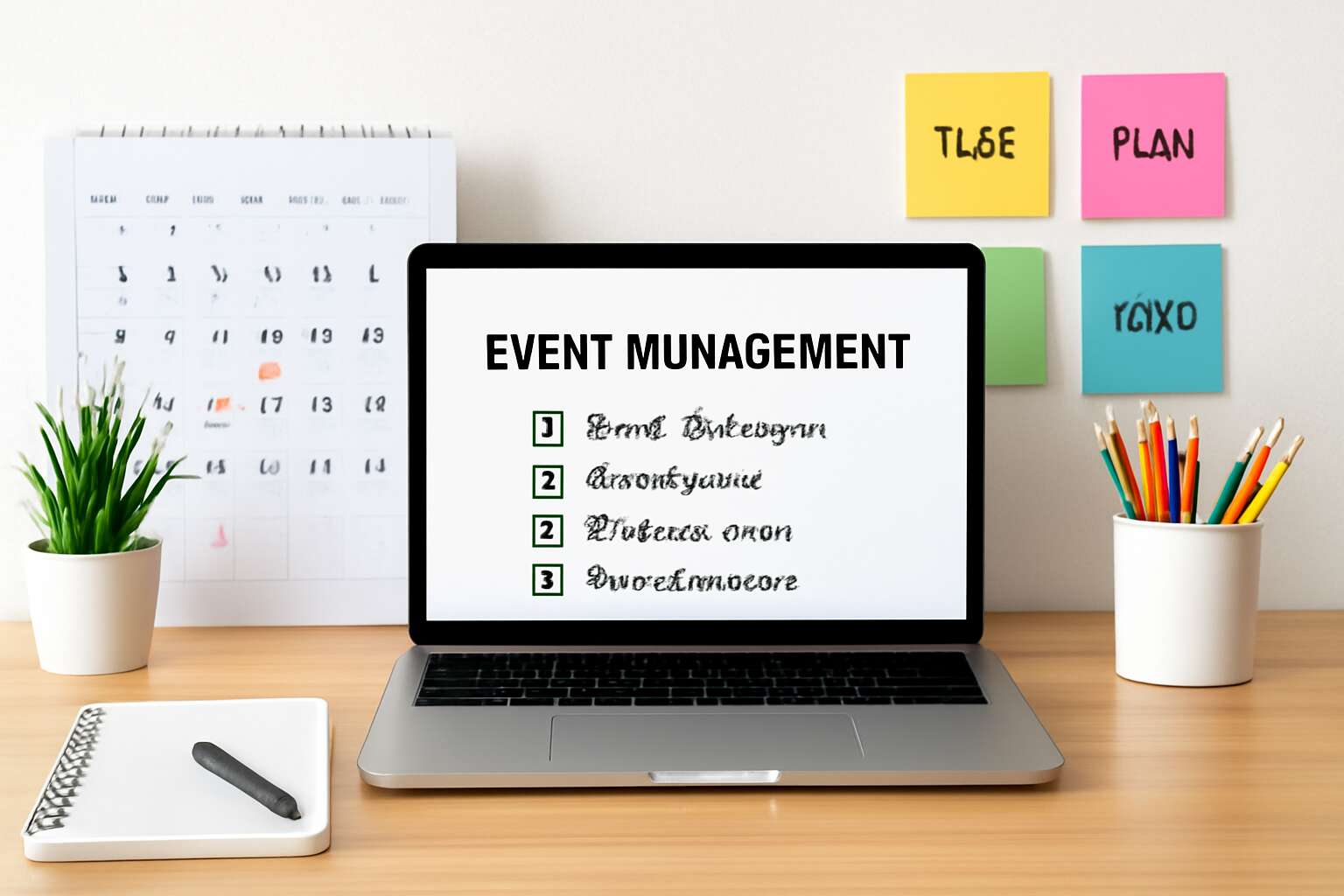
Foundations of Event Management Planning
Defining objectives and success metrics
“If you can’t measure it, you can’t manage it”—an old line that still hits true in South Africa’s bustling event scene. A solid start is built into our event management list: define why you’re gathering, and what success looks like, from attendance to impact.
- Clear, specific objectives
- Measurable success metrics
- Baseline data for comparison
Defining objectives means translating purpose into numbers. In practice, you align with stakeholders, attendees, and sponsors, setting outcomes that are unambiguous and time-bound. Metrics should map to those objectives, so you can tell whether the event moved the needle on engagement, credibility, or community sentiment.
With the right framework, planning becomes a conversation about impact, not merely logistics. The measure of a well-run event is how well the numbers reflect lived experience in the room.
Stakeholder roles and responsibility mapping
“The most volatile element is human expectation,” a veteran planner often whispers. Foundations of Event Management Planning hinge on clarity, not chaos, and stakeholder roles must be mapped with precision. In South Africa, with diverse venues and audiences, this becomes a practical discipline: translate influence into responsibility, ensure every voice is heard, and anchor decisions to a named owner. An honest event management list acts as the spine—defining who does what, when, and why, so strategy travels from page to practice.
Here are core roles and responsibilities that keep collaboration humane and effective:
- Sponsor liaison: sets vision, budgets, champion objectives.
- Lead organiser: coordinates teams, manages timeline.
- Venue and operations lead: oversees logistics, safety, access.
- Communications and guest experience lead: shapes messaging and attendee touchpoints.
- Volunteer and staffing coordinator: matches manpower with needs, trains on site.
- Compliance, health, and safety officer: secures permits, risk assessments.
Budgeting basics for events
Budget drift is the quiet saboteur of any event. In South Africa, where plans collide with weather, venues, and changing expectations, 65% of events overspend due to scope creep. This tale repeats on countless projects—the event management list turns that chaos into a precise map of money and accountability!
Foundations of budgeting begin with itemizing costs and forecasting cash flow. Build in a contingency of 10–15%, track revenue, and secure clear quotes and payment schedules. Vendor negotiations are the craft that keeps numbers aligned with reality.
Categories are mapped with care, then locked into the plan:
- Venue and infrastructure
- AV and technical support
- Catering and guest amenities
- Marketing and guest experience
With a named owner for each line, the plan travels from page to practice.
Timeline and milestone planning
“Failing to plan is planning to fail,” as the saying goes, and in South Africa that failure often shows up as a calendar full of yesterday’s never‑was. The Foundations of Event Management Planning Timeline turn those storms into a steady drumbeat—milestones that give momentum without micromanaging the moment.
A well-timed sequence keeps the event management list honest, from kickoff to curtain call. Each milestone earns its own space on the page, ensuring approvals, design decisions, and logistics align like a well-rehearsed chorus.
Key milestones (in broad, non-instructional terms):
- Initiation and alignment of objectives
- Design feasibility and scope lock
- Resource readiness and vendor confirmation
- Final approvals and go/no-go decision
With cadence rather than chaos, the planning becomes a narrative you can read at a glance—the kind of plot where the ending feels inevitable, not improvised.
Risk assessment and contingency planning
Risk is the ghost at the gala, and in South Africa even more so—one sudden rain squall or a load-shedding spell can turn a plan into a pageant of improv. A telling stat shows up to 40% of events veer off course because risk wasn’t priced in. Risk assessment and contingency planning belong in your event management list, giving you a steady drumbeat where chaos would otherwise crash the party.
Consider these risk vectors:
- Logistics hiccups and transport snags
- Vendor or AV tech failures
- Weather, power, or venue access quirks
- Safety, permits, and crowd-control concerns
Contingency planning isn’t gloom; it’s a shield that keeps the narrative intact when the plot twists. It’s the quiet engine behind a confident, professional event management list in South Africa.
Event Planning Checklist Essentials
Venue and vendor coordination
Venue and vendor coordination form the quiet backbone of every successful event. In South Africa’s lively gatherings, flawless logistics can elevate an ordinary night into an unforgettable experience. “The venue is the stage, and every vendor is the chorus,” notes a veteran SA planner.
Key venue checks ensure flow and safety: sightlines, access, power, and emergency routes; a layout that supports audience movement and branding; and a realistic contingency plan. This is a core piece of the event management list.
- Site inspection and capacity validation
- Power, lighting, and backup systems
- Accessibility and crowd flow planning
- Contractual terms and vendor SLAs
Vendor coordination keeps promises and timelines aligned: clear RFPs, lead times, delivery windows, and on-site briefings. With synchronized schedules, on-the-day execution becomes a coordinated dance that turns expectation into experience!
Permits, licenses, and compliance
In South Africa, permit delays account for up to 40% of last-minute hiccups at events. Permits, licenses, and compliance shape the opening act as surely as lighting shapes the stage. When the paperwork queues move slowly, nothing else can compensate for a rushed entrance!
- Liquor license (if serving alcohol)
- Temporary road closure or venue usage permit
- Noise by-law permit or sound clearance
- Health and safety compliance, including crowd management and emergency planning
- Fire safety certificate and clear evacuation routes
- Public liability insurance
With these in place, the event management list becomes actionable, aligning approvals, timelines, and on-site readiness. The small print—insurances, licenses, and safety checks—keeps the show moving and the hosts smiling!
Insurance and safety protocols
An event’s backbone isn’t glamour—it’s guardrails. Across South Africa, nearly half of post-event issues trace to missing safety protocols. The right approach elevates every detail, and the event management list is more than a checklist—it’s a covenant between hosts, staff, and guests. Insurance and safety protocols anchor the plan, letting creativity breathe without fear.
Insurance and safety protocols aren’t afterthoughts; they are the quiet guardians of a smooth operation. Consider these essentials, prepared before the first guest arrives:
- Public liability insurance and employer’s liability coverage
- Certificates of currency and risk assessments for vendors
- Emergency response plan and clear evacuation routes
- On-site medical support and crowd management resources
When these elements align, the event unfolds with confidence, and the event management list hums with purpose, while the crowd feels the magic.
Registration and attendee management
South Africa’s event season crackles with color, and the opening moment often happens at the registration desk. A striking statistic lingers in the air: nearly half of attendees judge an event by how seamlessly they sign in. My first image is a calm host, a smooth check-in, and a smile that says you belong—this is the heartbeat of the event management list.
Registration and attendee management aren’t mere forms; they are choreography: pre-registration data, privacy, name badges, and the etiquette of guest flow. Aligning these with your thematic vision lets the rest of the night breathe freely. When the welcome is warm and the lines disappear, creativity can spark in earnest!
- Pre-registration data handling
- Badge design and color-coding
- On-site guest flow management
- Privacy and consent considerations
Communication plan and attendee experience
In South Africa’s bustling event season, a sobering stat lingers: 47% of attendees judge the night by the ease of sign-in. The communication plan and attendee experience are not afterthoughts; they are the opening act, guiding guests from anticipation to immersion. A calm welcome desk, clear updates, and thoughtful wayfinding choreograph a sense of belonging, turning potential chaos into a shared heartbeat.
Within the event management list, these elements become a single, living experience. It’s about privacy respected, equal access, and warm hosts who read the room before stepping in. When every message lands with intention and every moment feels seamless, the room breathes, and creativity not only survives but thrives!
On-site Execution and Logistics
Scheduling and staffing rosters
“The clock is the most honest critic,” a veteran operations manager once said, and that truth sits at the heart of on-site execution in South Africa’s vibrant venues. When doors open and the room fills with energy, flawless action hinges on relentless rhythm, crisp handovers, and immediate problem solving. Every function—stage, lighting, guest services, and logistics—must synchronize as if reading from the same Run of Show, even when the room swirls with noise and adrenaline!
- Stage and technical management with clear lead and crew rosters
- Operations control for entry, flow, and crowd management
- Guest services and information desks to maintain calm
- Volunteer coordination and staff welfare, including breaks
Logistics scheduling and staffing rosters demand foresight: shift lengths, check-in windows, contingency coverage, and rapid handovers during the run. A lean, precise roster avoids gaps and burnout, while digital checklists keep everyone aligned. In the grand tapestry of events, this facet anchors reliability within the event management list.
AV, staging, and technical setup
On-site Execution and Logistics AV, staging, and technical setup unfurl with the precision of a South African sunrise over a city venue. The event management list guides every watt and whisper, turning nerves into choreography. From scaffold to smoke machine, from mic queues to stage exits, the plan threads the room together, so the energy lands where it should—on a flawless, immersive experience.
- Stage and platform integrity checks during load-in
- Audio-visual cueing and mixing for live feedback
- Video wall calibration, lighting intensity, and focus cues
- Power distribution, backup generators, and fault reporting
Under the tent, a lead technician maintains situational awareness, coordinating with lighting, sound, and stage crews for rapid handovers and immediate problem solving. Clear communication and rehearsed routines keep the show smooth even as the room hums with excitement.
Venue layout and wayfinding
In the first five minutes, a venue either greets the crowd with grace or leaves them plotting their own exit. A telling stat hints mood is forged at the doorway, not on the main stage. South Africa’s best events prove that on-site execution is choreography—clear circulation, readable wayfinding, and sightlines that invite rather than glare.
Venue layout and wayfinding shape the room’s tempo. Think of it as mapwork for the moment: intuitive routes, legible signage, and zones that keep crowds flowing rather than sprawling. Consider these essentials:
- Clear entry and exit corridors with intuitive signage
- Color-coded zones and floor markings to reduce bottlenecks
- Accessible routes and quiet refuges for staff and attendees
Under the tent, a lead technician acts as conductor, guiding lighting, sound, and stage crews through smooth handovers. Clear, rehearsed communication keeps the room alive while the energy rises. This is the heartbeat of the event management list.
Run-of-show and contingency drills
On-site execution is the heartbeat in motion. A lead technician becomes the conductor, guiding lighting, sound, and stage crews through smooth handovers that feel almost ritual. The run-of-show is rehearsed yet flexible, with precise call times, cue points, and clearly marked contingencies that sustain momentum rather than invite panic. When the floor hums with ready energy, the room comes alive by design.
The contingency drills sharpen response and resilience, turning potential chaos into choreography. Clear signals, practiced handoffs, and a live overview keep sightlines clear and energy steady as the room shifts from greeting to finale.
- Walk-through checks across zones highlighting sightlines and access
- Cue alignment with time buffers for smooth handovers
- Operational drills for equipment, power variations, and comms resilience
In this way, the event management list becomes the invisible script that keeps the South African crowd engaged from first hello to final encore.
Vendor coordination and delivery windows
On-site execution hinges on tight logistics and crystal-clear delivery windows. The event management list acts as the quiet captain, aligning venue staff, AV teams, catering, and security so movements feel seamless rather than rushed. In South Africa’s vibrant venues, precise timing turns potential bottlenecks into smooth handovers and keeps momentum from stalling as doors open and eyes light up at showtime.
- Vendor arrival windows and dock assignments to prevent congestion
- Real-time comms channels between venue ops and contractor leads
- Load-in/load-out sequencing with defined staging areas
- Contingency handoffs and clear exit routes to protect gear
When these pieces align, on-site operations feel almost choreographed, a tangible calm that attendees notice from the first hello to the final encore!
Post-Event Review and Optimization
Data collection and feedback mechanisms
Out here in South Africa’s towns and valleys, after the last song fades and the bonfire sighs, I hear the truth of an event linger in the conversations that follow. One in three organizers reports higher attendee satisfaction when they close the circle with a post-event review. That small ritual unlocks big changes, turning a moment into a memory that guides the next gathering.
Data collection and feedback mechanisms fuel this growth. They are not burdens; they are the quiet hands that shepherd improvement.
- Short, honest surveys handed to attendees as they depart
- Open debriefs with staff and volunteers
- On-site notes from observers and technicians
- Social listening from local communities and partners
- Vendor performance reflections after delivery windows
These insights flow into planning for the next event, with care for communities across South Africa, enriching the event management list for the road ahead.
ROI and performance analysis
Post-event reviews aren’t paperwork; they’re the backstage pass to better gigs. In South Africa, one in three organizers reports higher attendee satisfaction when they close the circle with a post-event review, and that momentum sticks. It’s the quiet heartbeat of the event management list.
ROI and performance analysis turn soft vibes into hard numbers: attendance lift, dwell time, and cost per engaged attendee. Bind insights from staff, vendors, and attendees into one readable narrative that informs future planning—without heroic sacrifices. When this cycle runs smoothly, budgets breathe easier and timelines stay realistic.
- Attendee satisfaction and engagement indicators
- Repeat attendance and referrals
- Cost per outcome and ROI realization
- Data quality and learning agility
In the South African landscape, that clarity keeps every town and valley in the loop. That’s how the road ahead stays lit.
Knowledge capture and transfer
Post-event review and optimization are not a postscript; they’re the heartbeat of the event management list. In South Africa, one in three organizers reports higher attendee satisfaction after a thorough post-event review, and that momentum travels to the next gig. Messy notes become a living map for the next gathering, guiding budgets, timelines, and team rhythms long after the last curtain falls.
- Capturing what worked, what didn’t, and why
- Codifying insights into playbooks, checklists, and training moments
- Sharing lessons through cross-team briefings and mentorship
Knowledge capture is a living bridge, linking hands on the ground with planners across towns and valleys. When insights are codified and transferred—through playbooks, briefings, and mentorship—the whole process stays nimble, empowering crews and partners to rise to the next challenge, no matter the starting point.
Sustainability and post-event wrap-up
In South Africa, one in three organizers reports higher attendee satisfaction after a thorough post-event review, proving that the wrap-up is not a closing curtain but a dawn. The post-event rhythm—where insights breathe, budgets re-calc, and timelines settle into memory—shapes the next gig more than any opening ceremony ever could. This is the heartbeat of the event management list.
- Sustainable lessons turn into evergreen playbooks and concise checklists.
- Mentorship connects crews across towns and seasons, sharing tacit wisdom.
- Living maps guide scope, roles, and the tempo of the next gathering.
As the dust settles, the true art begins: turning scattered notes into enduring narratives, and weaving those threads into cross-team briefings and mentorship. When insights are treated as living knowledge, the map glows for the next gathering, guiding scope, roles, and the tempo of teamwork across South Africa’s diverse landscape.
Lessons learned repository and process improvement
One in three SA organizers report higher attendee satisfaction after a thorough post-event review—the wrap-up is a dawn, not a curtain. That rhythm—insights breath, decisions tighten, and timelines settle into memory—shapes the next gig more than any pre-show spark ever could!
The post-event footprint grows into a living lessons learned repository and a blueprint for process improvement. In this vault of memory, every decision becomes actionable, every risk becomes a test case, and every success earns a stake in the next planning cycle.
Within this evolution, the event management list breathes as a guide for continuity.
- Centralize insights in a knowledge base with version history and easy search.
- Assign owners and timelines to implement improvements without drifting into memory.
- Review quarterly to weave learnings into future planning cycles.
When the repository glows, teams across South Africa move with shared clarity, aligning scope, roles, and tempo across diverse landscapes.



0 Comments